All About Clergymen

All About Clergymen

When I was considering writing my first novel, I brainstormed a few ideas but was most struck by the thought of Mr. Darcy being a clergyman. I wondered how he would be the same Mr. Darcy we love and how it would change him. Soon, A Windmill with a View was born. Mr. Darcy is not the only clergyman in the book, and their various lifestyles play a prominent role in the story, which turned out to be more focused on Elizabeth’s journey than Mr. Darcy’s. She interacted with several men of the cloth and learned more herself about them. Therefore, I had the chance to learn all sorts of new information about the Church of England during the Regency era. I thought I would share just a little of that. Some of this is pretty basic, and readers of Austenesque fiction may know much of it. I thought it would be helpful to gather some of the details for my own future reference and hope you enjoy it.

A church living is a job that comes with a home and a paycheck. That home is a parsonage. It might also be called a rectory or a vicarage, depending on whether the clergyman is a rector or a vicar. The home was sometimes in serious disrepair, as evidenced by the parsonage Colonel Brandon is embarrassed to offer Edward Ferrars in Sense and Sensibility. The patron was responsible for the upkeep of the parsonage.

Both rectors and vicars, as well as curates, are fully ordained priests, usually. The different titles can most easily be explained as pertaining to how they are paid. The greater tithes went to the rector. The lesser tithes went to the vicar, if there was one. The curate is hired and paid by either a rector or a vicar and could receive very little money to do some or all of the work in the parish. The curate had no job security and was required to find his own home. When a rector or vicar retired (or took an additional living and moved away), he generally continued to collect the parish tithes and paid a curate a meager sum, such as £50 per year or even far less.

The rector could actually be non-clergy if the tithes were set up to go to someone else. Then a vicar would be hired to do the work of the parish but receive only the lesser tithes. In Pride and Prejudice, Mr. Collins is a rector in Hunsford. In A Windmill with a View, he is a vicar in a different parish.

Tithing, or ten percent of a person’s income, was required by law to be paid to the Church of England at the time Jane Austen wrote. This could be paid in the form of money or farm products. The greater tithes were from the cereal crops, or grains, which was apparently the majority of the income of an estate or tenant farmer. The lesser tithes were the income from the produce or livestock. By the early 1800s, most tithes were paid in money rather than goods, but the sources of the income still mattered. Since tithes were based on the harvest, a rector had no fixed income from year to year. A stated value of a living was an estimate. I cannot find the source now, but town parish priests received income from rented pews, perhaps in lieu of tithes, as there were no crops.

This is a complex system, but William Savage sums it up.

Rectors were the clergy who had the right to the whole income of the living and operated only under the supervision and control of the diocesan bishop. Vicars were formally ‘deputies’ to a rector, in cases where the rector was either unable or unwilling to serve the parish himself. This applied mostly where the rectorship was owned by an institution, such as an Oxford or Cambridge college, or by a lay-person. In such cases, the right to collect the full tithe lay with the rector, who would share it with the vicar in an agreed proportion.

But how did a man get a living and at what age?

Maria Grace gives a quick overview of the education required of a clergyman.

To be considered for ordination, a candidate needed a  degree from Cambridge or Oxford. No theological colleges or courses of study existed so a standard honors degree satisfied the requirement. Afterwards, the candidate needed a testimonial from his college vouching for his fitness for ordination. Finally, he needed to locate a bishop and make arrangements for an examination that would satisfy the bishop of his competency in Latin, knowledge of the Scripture, and familiarity with the liturgy and church doctrine as written in the 39 Articles. Some bishops made only a cursory examination in these areas, only a few took their responsibilities more seriously…His career would begin at age 23, as a deacon, assisting an ordained priest. At 24 he could be fully ordained and eligible to be in charge of a parish.

In Sense and Sensibility, Edward Ferrars is 24 when he and Elinor Dashwood become engaged. He is taking orders about this time. I see no evidence that he served as a deacon for a year before taking the living Colonel Brandon gifts him, but he is of the required age. It is possible that Edward has been serving as a deacon with a lot of freedom of movement or several vacation periods, as he is in a few places for weeks at a time in this year. If he was working near Norland, it could account for why he was able to remain in the area for so long. I haven’t analyzed the timeline and am not a Sense and Sensibility scholar, but it is possible Jane Austen made allowances for Edward to serve his time as a deacon, perhaps starting before he met Elinor.

In reviewing my previous research, however, I was curious about something so searched again down another path and found something new. A man could get an exception from being a deacon and go straight to being fully ordained at age 24 and able to administer sacraments, but this required permission from the Archbishop of Canterbury, which Edward Ferrars was unlikely to have requested. These rules were set forth in the Clergy Ordination Act of 1804. I do not see in that Act any requirement to do anything as a deacon or to be a deacon for a full year before becoming a priest after he turned 24.

Perhaps Edward was a deacon at some point but did not assist a priest. We should also keep in mind that Jane Austen wrote her first draft of Sense and Sensibility in 1795, so perhaps there was no deacon requirement at the time and she saw no reason to add it in later drafts. Whether Edward was a deacon or not has little bearing on her story, but I am curious about whether he had taken that step toward a profession around the time he met Elinor. To me, it seemed he continued to be aimless until the truth came out and he thought he would be forced to provide for Lucy Steele.

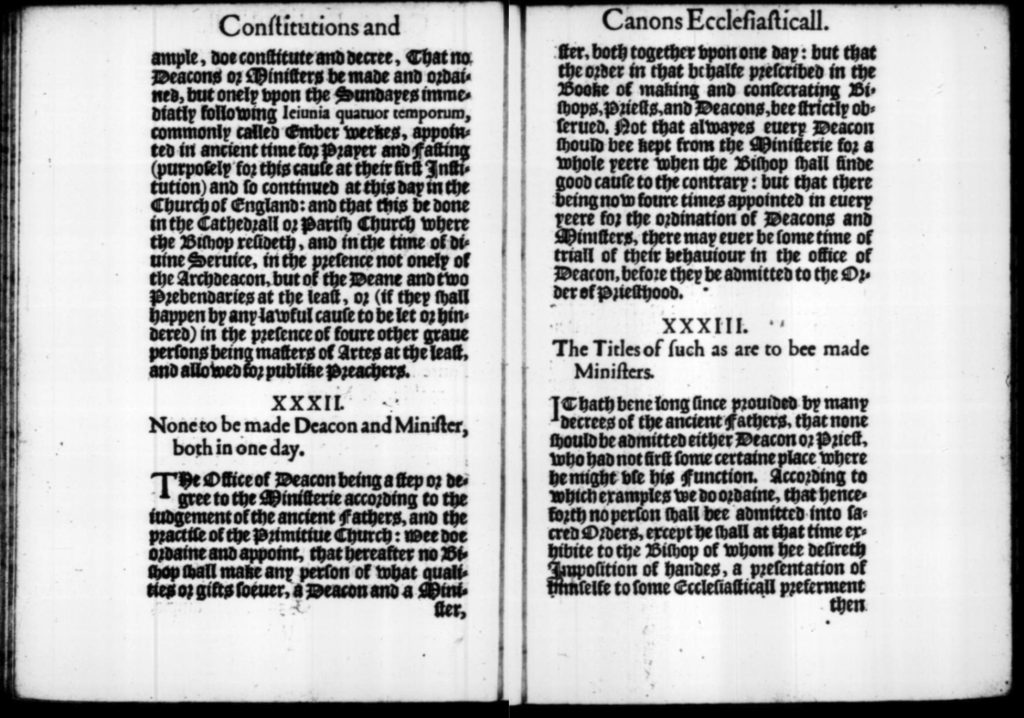
Then I found in the Church’s 1604 Canons that there were just four times each year when men could be ordained. I have not learned whether this was still the case in the late 1700s and early 1800s or what those four times of year were. Perhaps the same quarter days used for so many other legal systems at the time. And even more interesting in the 1604 Canons: “None to be made Deacon and Minister both in one day.” A man had to be a deacon for at least three months, then, but not necessarily for a full year.

The 1604 Canons elaborate on this requirement:

Not that always every Deacon should be kept from the Ministry for a whole year, when the Bishop shall find good cause to the contrary; but that there being now four times appointed in every year for the Ordination of Deacons and Ministers, there may ever be some time of trial of their behaviour in the office of Deacon, before they be admitted to the order of Priesthood.

In any case, in A Windmill with a View, Mr. Darcy is a deacon serving under a rector for a year before taking on his own parish at age 24.

Looking at church laws from 1604 can be a bad idea, as I have found it difficult to hunt down more recent rules on the same topics to confirm whether the rules are still in place. For example, the 1604 Canons say a man must have a living granted to him before he can be ordained.

The 1604 Canons say a man

can’t take orders without proof they have a job offer, is a Fellow at Oxford or Cambridge, or has had a Master of Arts degree for five years and lives at one of the universities, or if the Bishop who ordains is about to give him a benefice or curateship “then void”.

Records from the 1800s, though, contradict that rule, so it must have been repealed at some point. Perhaps it shouldn’t have been? Once ordained, a priest was far from guaranteed he would ever find a job in his chosen profession. Apparently, fewer than half obtained a living. Those who did were chosen by a patron who held an advowson.

An advowson is the right to grant a church living. An advowson could be held by a private person, a college/university, or the church itself. One source indicated the Crown could also hold an advowson. A church living could be given or sold to a priest. This living would then be held for life. Only grievous reasons could cause a bishop to take it away. Mr. Collins did not need to work so hard to please Lady Catherine, as she could make his life difficult (which she does), but she could not oust him from his position.

In Pride and Prejudice, George Wickham was granted a living (by his godfather, Mr. Darcy, who held the advowson for the Kympton living) but gave it up, or sold it back to the younger Mr. Darcy (who now held the advowson since his father died), for £3,000. Mr. Darcy probably had no legal responsibility to pay Wickham, as nothing binding giving Wickham the living was likely to have been formalized, since Wickham had not taken orders. Someone holding an advowson could save a living for a child not yet old enough to take orders, and maybe contracts were drawn up to formalize this. I did not find any evidence of this in my research. If they did want to preserve the living for a future cleric, they could grant the living temporarily to another. In Sense and Sensibility, John Dashwood says Colonel Brandon could have sold the living under his control for £1,400 pounds rather than simply giving it to Edward Ferrars. The living was said to be worth £200 pounds per year.

This leads to another important question. The acceptable genteel professions for a younger son of a gentleman were military, law, and the church. None of these were expected to bring in an income equal to the heir’s, but was it still livable?

Maria Grace summarizes the question of a clergyman’s income.

The majority of England’s parishes were small. An 1802 figure suggests a third of the benefices brought in less than £150 a year and some 1,000 of those less than £100. (Remember, about £50 a year was more or less equivalent to our minimum wage.)  A clergyman needed a  living of £300-400 per annum to be on the level  with the lesser gentry. Incomes might be increased by serving more than one parish, but this seldom resulted in real wealth. Only a third of all clergy acquired more than one living…Additional income might also be found through teaching or cultivating gardens and the glebe (acreage provided by the parish.)

James Heldman points out in a JASNA essay that Jane Austen does not dwell on income for her clergymen.

Edmund Bertram’s income from the Mansfield living, once he succeeds to it, is £700 a year…But Edmund is, after all, the younger son of Sir Thomas Bertram, and there seems little question that both Sir Thomas and eventually Tom, when he inherits the baronetcy, will see that Edmund and Fanny are more than amply provided for. In all of these novels, the central characters are generally already financially comfortable, and what references to money these novels do contain seem to be there only to establish that fact in order that Jane Austen can then move on to other matters.

For example, Henry Tilney in Northanger Abbey has a family living at Woodston but also extra income from his father: “Did Henry’s income depend solely on this living, he would not be ill-provided for.” Henry has enough income that he has a curate. We can also assume Catherine Morland’s father does sufficiently well for his ten children (though not good enough for the Thorpes and General Tilney) because “he had an independence besides two good livings.”

In A Windmill with a View, clergymen fall all over the spectrum as far as their income is concerned. Elizabeth Bennet begins her journey as a clergyman’s wife with a substantially lower income than she anticipates. Read the book to see how she manages a lifestyle very different from the one she was used to at Longbourn.

Resources:

Happy Jane Austen Day!

Happy Jane Austen Day!

In my family, we celebrate Jane Austen Day twice each year: on her birthday, Dec. 16, and on her death day, July 18. We sometimes celebrate big and sometimes small. In July, I usually make clotted cream and scones at the minimum. In December, with so many other sweets, I generally skip them. On or around both days, I usually make little Yorkshire puddings for dinner. We eat them with onion gravy, chicken sausage, and some kind of vegetable. We usually have potatoes, but this year we had balsamic glazed carrots. And we had that dinner a few days ago to accommodate my 18-year-old son’s work schedule. He won’t be around for dinner tonight but didn’t want to miss the Yorkshire puddings.

I wasn’t feeling great on Wednesday, though, when we had decided to celebrate Jane Austen Day. I had already made the clotted cream, as it takes 7-10 days, but I wasn’t up for making scones on top of the dinner. My son stepped in and made the scones for the first time. I was not concerned, as he is excellent at baking and cooking. Since we opted to have the scones for dessert Wednesday rather than an earlier meal or snack, he made only 5 scones for the family and saved the rest of the dough for me to bake.

This morning, I finally felt good enough to bake them, so we enjoyed more today, and I wanted to share them with you. We were very casual this week. Because, again, I wasn’t feeling great. Sometimes in the past we have done a full afternoon tea and made it fancy. Not this time.

The scones were not as tall and layered as usual. I do think I had to work the dough a bit too much when I took it out of the refrigerator today because my son hadn’t fully mixed what he put aside, but it tasted great.

And yes, that is way too much clotted cream for two scones. My 15-year-old son had to take some of it.

On Wednesday, we also had the 1995 BBC Pride and Prejudice on in the background all afternoon. We got through half of it. I read the book every year but don’t watch it very often. I love it, but it is long, and I prefer reading over movies. I am more likely to search for and watch a certain favorite part rather than the whole six episodes. Maybe I will watch the second half in the coming week, though. It has been a while, and it makes me happy.

When you break open your scones to add strawberry jam and clotted cream, what order do you use? Do you like your scones Cornish (cream on top) or Devon (jam on top)?

Ranks and Titles

Ranks and Titles

JAFF Bonanza went well. Thank you, and welcome to all my new readers. I do not have a regular schedule for posts, but I will likely write something for you every week or two. Today I have a topic that came up in editing.

Ranks and titles of nobility can be a nightmare to sort out, and although I still have questions, the sources I have reviewed give enough clarity that I am confident in choices I made in Mr. Darcy’s Diamonds. I hope you will be satisfied, as well.

In this book, I have a duke whose only son is an earl. “Hey! You can’t do that!” you might be saying. You may be aware the hierarchy is:

Duke, Marquess, Earl, Viscount, Baron

Yes, but…

The eldest son of a duke takes his father’s highest subsidiary title. Usually a duke has a marquessate, but he might not. He may hold an earldom or nothing at all.

I really wanted this character in my book to be an earl (mostly so he could use his own surname rather than a place in his title but for other reasons, as well). But an astute beta reader called me out, so I considered 1) explaining it in some way in the text, 2) writing an Author’s Note and hoping people would read it, 3) changing him to a marquess, or 4) changing his father, the duke, to a marquess instead. I had decided on the fourth option, but before the extensive revision that would have required and the loss of a part of the character of the duke I had grown to love, I consulted other authors. I appreciated the vote of confidence and the suggestion that I go with the first option: briefly mention early in the story that the duke doesn’t hold a marquessate. Simple.

Some of the resources I found useful in sorting this out follow. I will definitely need to review these every time I mention the peerage in a new book. The system is rather complex and not without exceptions.

Free JAFF July 1

JAFF Bonanza: free ebooks

Tomorrow, July 1, is JAFF Bub! Or JAFF Bonanza. That’s the day when lots of authors give away an Austenesque book for free for one day only. You can get a free ebook of A Windmill with a View. Even if you already read the book in Kindle Unlimited or bought the paperback, you can get your own ebook copy, which includes a sneak preview of the first two chapters of my new book, Mr. Darcy’s Diamonds. If you already bought the Windmill ebook, be sure to update it to get the sneak peek at the end.

Click HERE to find my book and more than 40 others by great authors of Austenesque fiction.

I’m sure you’ll find several you’ll love.

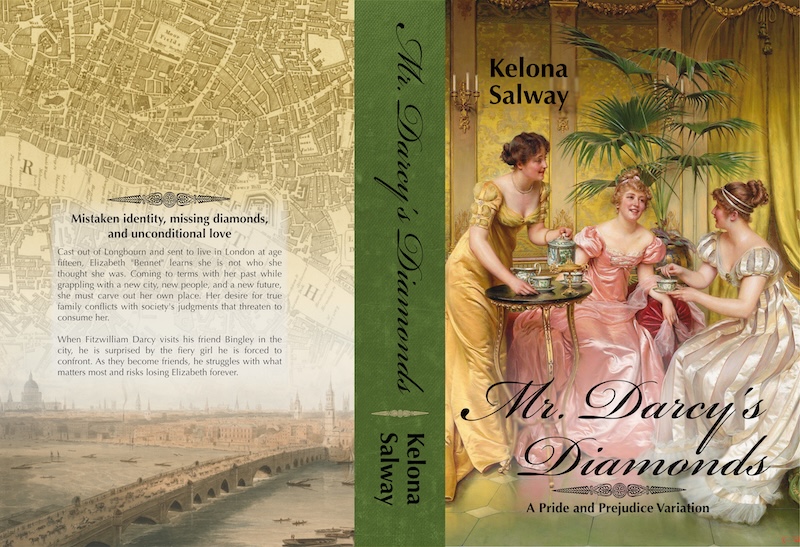
Diamonds: Cover reveal and Pre-order

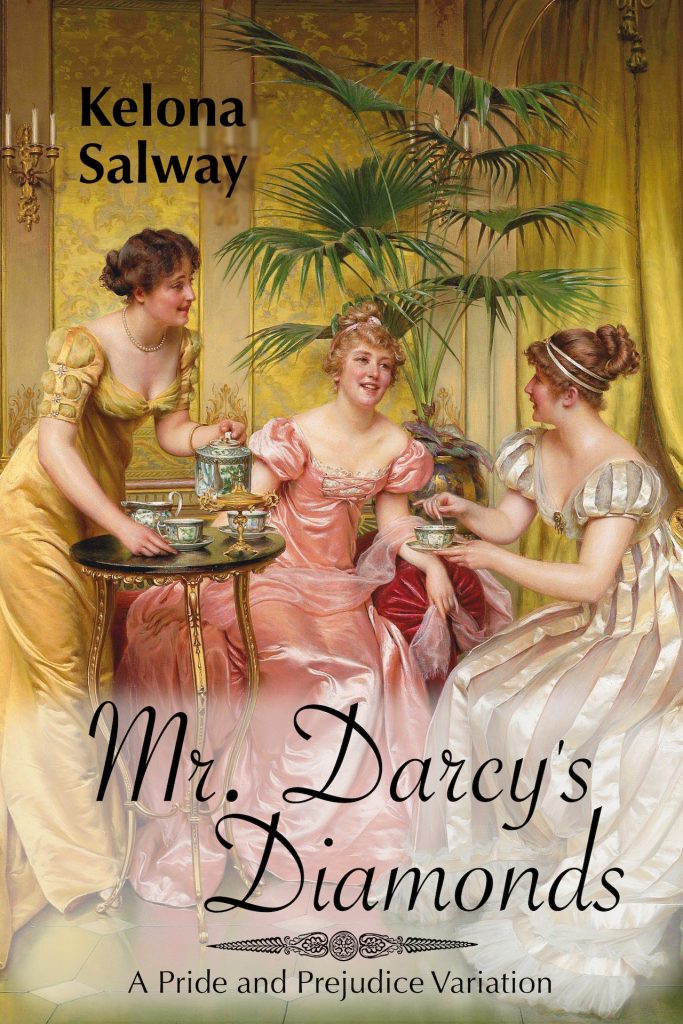
Mr. Darcy’s Diamonds: Cover reveal and Pre-order

Wow! I put Mr. Darcy’s Diamonds up for pre-order on Amazon a week ago with a mock cover, and people have already found it and bought it. Thank you!

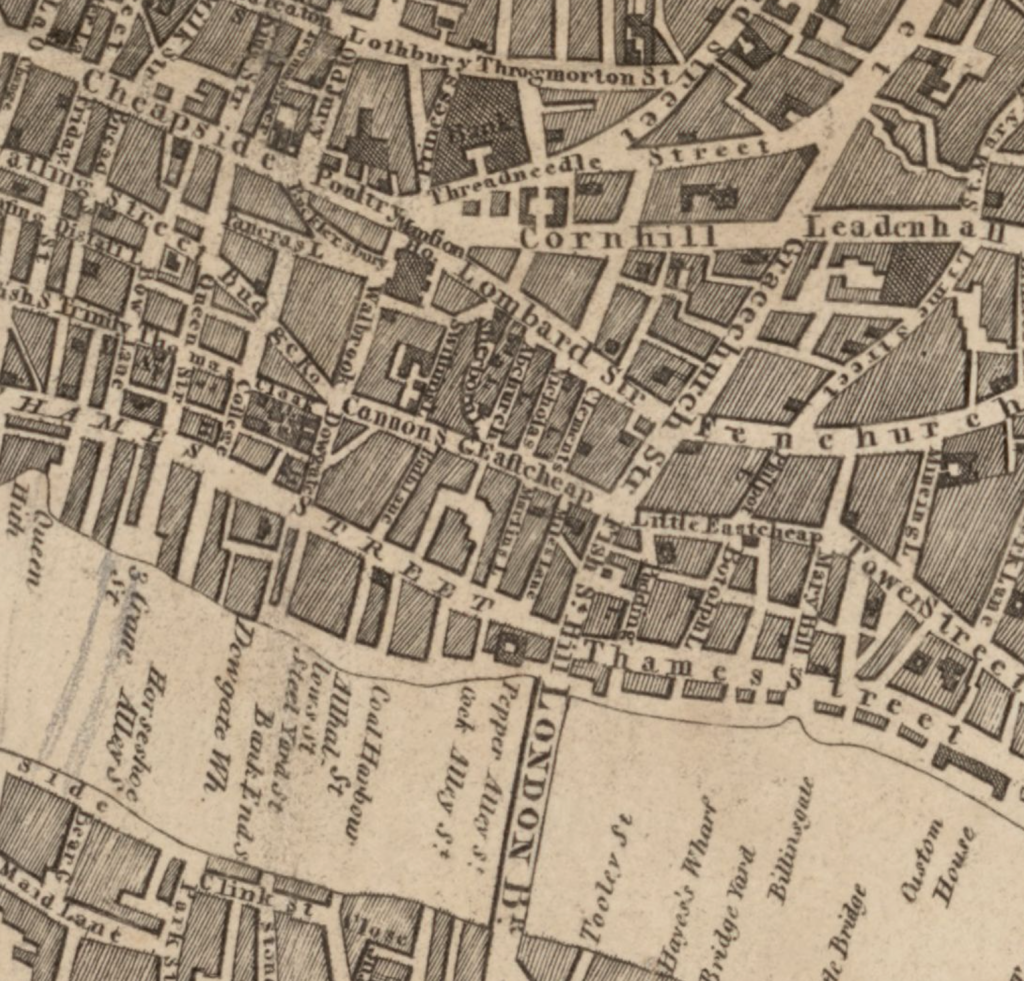
This is a quick post just to let you know the book will be available Sept. 17, and I would like to share my cover with you. This is the ebook cover, so just the front. I have also made a draft of the back cover for the paperback, which I love, but it is not quite ready to show you. I will tell you that it has a map of a section of London on it. You will know why when you read the book, but I will also tell you more in a future post.

Oh, I am also trying to work out a way for you to reply to these posts if you get them in your email. My first test was unsuccessful. If you want to reach me, the Contact page does work.

Happy reading!

Poisonous Plants

Poisonous Plants

As I wrote A Windmill with a View, I kept handy an online resource that told me which vegetables and fruits were in season during various months in England. I also referred often to Regency era cookbooks for insight on how Elizabeth could use the fresh produce. Before she marries Mr. Collins and becomes his unpaid cook and housekeeper, though, Elizabeth is handy in the Longbourn stillroom and knows something about plants. The opening scene has her grinding plants to obtain a poison.

I have described the flowers as having “bright yellow petals” and blossoms with “blushes of red and darker striated markings.” The poison itself will make its recipient ill and unable to hold down her meals.

The flower I found for this small but important duty in A Windmill with a View is called Alstroemeria.

GardenersWorld.com advises gardeners in the UK to be careful around the flower, as it can cause “mild vomiting or diarrhoea, while skin contact can cause a rash or irritation and, rarely, blisters and eye irritation.”

This flower was too good to pass up even though it was not actually present in England in 1811. “They were only introduced to Europe from South America in the mid-18th century by botanist Baron Clas Alströmer,” when they became a popular Victorian flower for their symbolism of friendship. Kind of ironic.

In A Windmill with a View, Elizabeth actually does have friendship in mind far more than any evil intent when she extracts the Alstroemeria poison. Read the book to learn how that works out.

Mr. Darcy’s Diamonds

Mr. Darcy’s Diamonds

Mistaken identity, missing diamonds, and unconditional love.

Cast out of Longbourn and sent to live in London at age fifteen, Elizabeth “Bennet” learns she is not who she thought she was. Coming to terms with her past while grappling with a new city, new people, and a new future, she must carve out her place. She will either discover what family truly means or allow society’s judgments to consume her.

When Fitzwilliam Darcy visits his friend Bingley in the city, he is surprised by the fiery girl he is forced to confront. As they become friends, he grapples with what matters most and risks losing Elizabeth forever.

Mr. Darcy’s Diamonds is a sweet, high-angst, Elizabeth-is-not-a-Bennet, enemies to friends to lovers, Regency-era Pride and Prejudice variation featuring Elizabeth’s coming of age and Darcy’s second chance.

The first draft of Mr. Darcy’s Diamonds is complete! I made a bunch of comments to myself as I wrote, things I need to check on or details I want to add. I have just started going through those, and then I will read the book for the first time and see what I think.

This book is so different from A Windmill with a View, but I really like the idea of it, too. It is almost twice as long as Windmill right now, so as I edit, I will be looking to see what needs to be tightened to make for the best story. The plot covers a lot, though, so expect a longer book.

Whereas A Windmill with a View is medium angst (and pretty low angst after the first third), Mr. Darcy’s Diamonds is higher angst. I promise Darcy and Elizabeth get their happy ending, but they don’t know that through the ups and downs of their relationship.

This book was so much fun to research and write. I’ll put some historical notes in other posts to provide more detail, but I tried to be as accurate as possible in the book.

A Windmill with a View

A Windmill with a View

My first novel, an alternate imagining of Pride and Prejudice, starts at Longbourn about four months before Jane Austen begins her story. I changed a few key aspects of Austen’s story, but my blurb, below, is not very specific on tropes contained in the book because I didn’t want spoilers. If you do want them, other readers have put them in their Amazon reviews, or you can ask me. If you have read the book, do you wish you had known more about Darcy’s situation before you started? Go to the Contact page to send me a note to let me know.

I had a lot of encouragement from my husband, sons, and author friend Summer Hanford as I wrote this book. Thank you!

The best preparation for writing the book was my reading hundreds of Austenesque novels and Jane Austen’s own works for the past three decades. The internet was also my good friend as I wrote. I do not know how people researched JAFF in the 1990s or earlier. Really good libraries? Personal travel?

I really appreciate all the universities, organizations, and historians who post papers and articles online for all to learn. I also appreciate being able to find online facsimiles of original 1700s and 1800s books of recipes (receipts), sermons, and children’s stories, as well as church and government records.

We are truly blessed to have so much information to sift through from home.

As you read A Windmill with a View, I hope you enjoyed learning a little bit about how the Church of England was structured and the various ways clergymen and their families might have lived in the early 1800s.

Elizabeth is unprepared to be a clergyman’s wife.

Elizabeth Bennet is forced into marriage with her father’s heir to save her sisters and preserve her family home. She believes endurance and duty will be enough to see her through, only to find she is bound to a cruel, controlling man who will not consummate their union and risk children, denying her the only solace her marriage could possibly bring. Now, Elizabeth must learn how to survive, and eventually reclaim herself, by developing new skills and cultivating unexpected friendships—or risk losing her spirit entirely.

Fitzwilliam Darcy has weathered disappointment and betrayal that has forced him away from his beloved Pemberley. He never expected his greatest trial to come in the form of a married woman who challenges his convictions and awakens his heart. As circumstances draw Elizabeth repeatedly into his path, Darcy strives to honor restraint and propriety despite growing attachment and an increasing desire to protect her from her husband. In the end, will she be the one to save him?

A Windmill with a View is a Regency-era Pride and Prejudice variation novel of approximately 100,000 words featuring a sweet, medium-angst romance centered on resilience, faith, and starting over. This story includes a previous unconsummated marriage for Elizabeth, Christian themes, verbal abuse by a narcissistic spouse, and character deaths (not the happy couple), but it ultimately delivers a well-earned happily ever after with Mr. Darcy. Please note: At no time is either Darcy or Elizabeth unfaithful.

(I had to add the note at the end of the blurb to counteract a false summary of my book that Amazon’s AI generated.)

Welcome

Welcome

Welcome to my blog! Thank you for coming to check out my books. If you are reading this within a couple of months of my writing it, you probably found me through my first Pride and Prejudice variation, A Windmill with a View, published in March 2026. I hope you liked it and have come here for more.

I am currently working on Mr. Darcy’s Diamonds, my second Pride and Prejudice variation. The writing process on this one has been slower, as I anticipated. It is longer than Windmill and will require me to do more editing because of the scope of the story and the plot pivots I made part way through. The first draft is nearly complete, though, so come back for updates. My current plan is to release Mr. Darcy’s Diamonds in early September.

Both books have required me to do a great deal of research, and my plan is to share some more of that with you beyond what made it into the final books. If you want to reach out, please send me a message on the Contact page. I would love to hear from you!

Scroll to Top

Author Kelona Salway

Austenesque Fiction

Skip to content ↓